FOX by John Reinhard Dizon

Outfoxed -5 stars

Fox, by John Reinhard Dizon, is a fast-moving, action-packed novel set in the 1960s in Vietnam. The main character of the book, Sergeant Richard McCain, a Green Beret, is part of a special operations group principally set up near the demilitarised zone to secure those villagers living close to the border with North Vietnam and to train them in defending themselves against the Viet Cong. Because of his outstanding combatant skills, Richard is also assigned other tasks, one involving Pol Pot’s sadistic Khmer Rough. Amid Viet Cong attacks and other brutal and bloody actions, there is a delightful section where this tough and seemingly heartless combatant finds romance.

This is a novel with strong characters and much research on the Vietnamese situation. In fact, the author leaves no stone unturned as he not only accurately describes the brutality of this war but also the corruption involving black market arms and drug dealing― it would seem a reoccurring theme in other pointless American wars such as Afghanistan and Ukraine. It is also an accurate reflection of the Cold War period when the West, particularly Americans, were anti-communist.

I enjoyed reading the novel, especially once after settling down and establishing the characters and the situation. Once drawn into the novel it was hard to put down.

Brian Wilson

Moments In Time- A collection of Short Stories BY BRIAN WILSON

The US Review of Books
reviewed by Sheila M. Trask

“Who would have thought that this could happen in Christchurch – at one
time considered the least likely city in New Zealand to have a large
earthquake? “


Brian Wilson was on the streets in Christchurch New Zealand in February 2011
when the city experienced an intense earthquake with a magnitude of 6.3 on the
Richter scale. The quake and its aftershocks brought down church steeples, office
buildings, and people’s homes. In the year that followed, Wilson wrote a series of short stories that capture the time-stopping shock of the disaster and the surreal return to an ordinary life of schedules and
appointments in the aftermath.


An aptly named collection, Moments in Time considers the subjective nature of time’s passage. Train
schedules and alarm clocks mark daily time for one character, while another reels from the shock of not
recognizing his 85-year-old mother in a nursing home hallway. This contemplation of time’s nuances could become tiresome. but Wilson’s combination of realism and humour keeps these slice-of, life vignettes fresh and engaging. Wilson’s intimacy with the places he writes about shows in several delightful anecdotes.


In one, a character plagued with sand fleas while tenting in the Southern Alps of New Zealand laments that the fleas ‘invade the privacy of your tent and find a part of your face to stake a claim ” These unique,
humorous moments help the reader to forgive Wilson when he occasionally strays into fact-filled descriptions reminiscent of tourist guidebooks.


Several of Wilson’s poems appear between the tales, offering vivid imagery that describes the earthquake
itself ‘Rolling, bowling, the ground it’s shifting/Shaking, breaking dropping, lifting,” writes Wilson in a piece simply entitled Earthquakes. Other poems overflow with cliché and rhyme, but the poetry provides another viewpoint in a collection that is all about changing perspectives.

1 ENOCH THE HERMENEIA TRANSLATION George W.E. Nickelsburg James C. Vanderka

I’ve always been interested in why certain books were excluded from the Bible. Enoch is one of these books, supported as well by fragments of earlier sections preserved among the Dead Sea Scrolls and dated from 150 to 200BC. Today the Book of Enoch only has survived in its entirety in the Ethiopic translation. 1 Enoch, The Hermeneia Translation, is the only English translation of 1 Enoch that takes into consideration all of the textual data now available in the Ethiopic version and the Greek texts, in addition to the Dead Sea Aramaic fragments. The book comprises:

1. Book of the Watchers (1-36)
2. Book of the Similitudes (37-71)
3. Book of the Astronomical Writings (72-82)
4. Book of the Dream Visions (83-90)
5. Book of the Epistle of Enoch (91-107)

In reading this book I hoped to find an answer to the question of whether this book should have been included in the Bible and I wasn’t disappointed. While at times the book was wordy and hard to follow I found it covered a lot of Genesis and even Revelation. Much of the book is in prophesy predicting Noah and the flood and being the earliest writing to prophesy the coming of Jesus. “Enoch 48.10: And on the day of their trouble there will be rest on the earth and they will fall down in front of him and will not rise. And there will be no one who will take them with his hands and raise them for they denied the Lord of Spirits and his Messiah”. It explains who the Nephilim were. While Jesus, never referred directly to Enoch, what is clear is that in the Book of Mathew 22: 29-30, Jesus replied, “You are in error because you do not know the Scriptures or the power of God. At the resurrection people will neither marry nor be given in marriage; they will be like the angels in heaven.” This is only stated in the book of Enoch. The book of Jude in the Old Testament also refers to Enoch in quoting a prophecy (Jude 1:14). Perhaps then the book of Enoch should at least in part be included in the Bible. I would certainly recommend it to those who have first read the bible.


In The Wake of the Mary Celeste

This book was lent to me by a friend. Obligingly I read it and decided on giving it a review. While I love history I had no knowledge of the abandonment of the Mary Celeste one of just many sea mysteries of the nineteenth century. From the Internet, I ascertained that the vessel was found abandoned and no one knows what happened to Captain Briggs, his family and his crew.

 Sadly, there is no Foreword in this book to introduce the subject somewhat in better detail than the description on the back cover. For instance, where does Conan Doyle fit into this historical event, are any of the letters genuine or is this all totally fiction except for some details on the abandonment of the ship? A book should stand alone and historical fiction should have sufficient clarity in order to differentiate between fact and fiction. For these reasons I do not recommend this book and think a 3-star is more than generous.  

Brian Wilson

FROM TARANTO TO TRIESTE

By Jennifer Mallinson

From Taranto To Trieste is a well-researched historical record of the second New Zealand Division’s Italian Campaign during WWII. Jennifer Mallinson, the author, is a New Zealander who has lived in Italy since the early 1970s. This book is very thorough with maps to assist the reader and many old photos taken during the war, as well as more recent photos. It follows the New Zealanders, Indians, British, Poles and other forces from Taranto in the south to Trieste in the north where the allied forces finally succeed in driving out the Germans. Italy is a beautiful country with its own European character and this comes through in many of the photos. If you are interested in history or even the picturesque scenery of Italy then you would enjoy this book.

Brian Wilson

Hostile Takeover-the socialist revolution by John Reinhart Dizon

There are many books covering recent USA political and cultural events, but few provide the comprehensive and balanced analysis given by John Reinhard Dizon in Hostile Takeover -the socialist revolution. As an MA honours graduate I know the importance of first-hand information and since 2015 (as a New Zealander) I have followed USA politics such as senate hearings, reading inspector general reports, following house and presidential debates and much more. Much of the in-depth analysis in Hostile Takeover resonates with my understanding of USA cultural and political events.

This well written 5-star book is a must-read for those who care about the future of the USA, and their own livelihoods, well-being and freedom. The future of America lies very much in the hands of Americans. There is a saying that the eyes are useless when the mind is blind; one to be remembered in keeping an open mind when reading through the chapters.

Brian Wilson

BUILDING BRIDGES by ROY and RUTH WOOD

Papua New Guinea is a land of high mountains, deep valleys, swollen rivers, jungles and isolated communities. When Roy and Ruth Woods served as missionaries here the people in the isolated areas were mostly cannibals, and the pathways to their villages were often not even tracks through the jungle. Their strong faith was central to their experiences in bringing the gospel to these communities. One can not only admire Roy and Ruth for their strong faith but also for their perseverance in what might be described as a difficult and hostile environment.

This book is a gem; inspirational for Christian believers and compelling evidence of a God for those who are not. For those interested in anthropology, in particular PNG tribal culture, it is a must-read. I enjoyed the book and in the past have enjoyed listening to Roy speak on the subject. This was a good first book by the authors but would have made for easier reading had the stories been connected and arranged chronologically. The presentation was comprised of coloured pictures, bible verses and quotes and these all add to what I can describe as a recommended read.

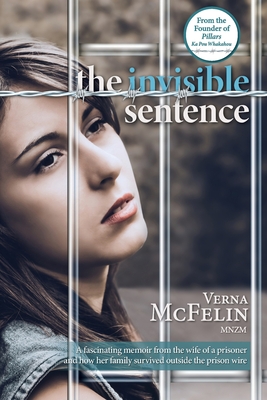
The Invisible Sentence by Verna McFelin

The Invisible Sentence: A fascinating memoir from the wife of a prisoner and how her family survived outside the prison wire


The victims of crime include not only those aggrieved but also the innocent families of those incarcerated. The latter are often viewed as second-rate citizens and serve not only a sentence of humiliation but also poverty and time apart from a loved one. Cleverly titled The Invisible Sentence, Verna McFelin, bravely recalls her experiences and how she came to form the organisation called Pillars. In her account, as a Christian, she shares her meaningful relationship with God, especially over this troubling period.
This is a well-written book, meticulously proofread and appropriately formatted to highlight points. It is an easy read, and in many ways inspirational. Verna has certainly been blessed.
I would recommend this book for both Christian and secular readers. It is a book that will open your eyes to injustice within our society.

Brian Wilson

TREASURE OF THE GENERAL GRANT

Treasure of the General Grant

Reviewed by K.C. Finn for Readers’ Favorite

Reviewed by K.C. Finn for Readers’ Favorite

Treasure of the General Grant is a work of fiction in the historical fiction, contemporary mystery, and interpersonal drama sub-genres, and was penned by author Brian Wilson. As the title suggests, the work makes reference to the sunken clipper, the General Grant, as the central theme of its mystery, notably the large amounts of gold that were said to be on board at the time of its disaster. We meet protagonist Robbie, a native New Zealander, who is determined to find out the true origins of his deceased uncle’s connection to the ship, and if indeed there is hidden knowledge which might take him to the treasure that nobody else has been able to find.

Author Brian Wilson takes one of history’s most fascinating mysteries and turns it into a fantastic tale of adventure, mystery, and intrigue for his reading audience. One of the things I really enjoyed about this concise novel was the amount of real history which it packs in, delivering an educational background to the trade routes and sailing practices of the nineteenth century. This wealth of research makes the novel all the more engrossing and provides solid foundations for the fun, fast-paced adventures of Robbie and his discoveries to take place. The dialogue too had some really witty touches, providing colorful characterization but also some great, accessible plot exposition. Overall, I would definitely recommend Treasure of the General Grant for fans of historical mysteries and modern-day capers with some great action and real history behind it.